
 10/01/2022
- Updated on: 30/09/2026
-
-
 Thomas Nicolson
-
 Back
Back
by Tom Nicolson
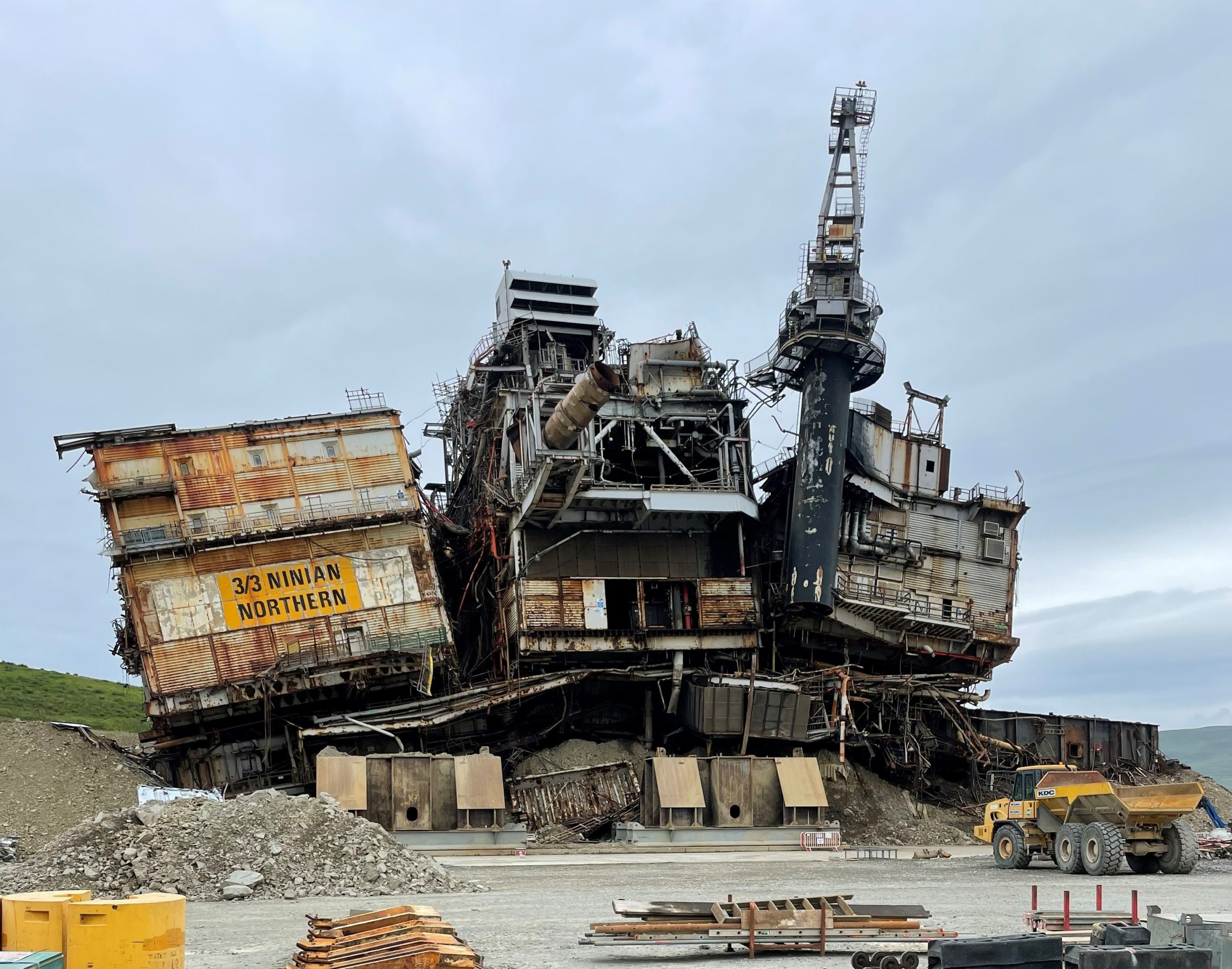
Nestled deep in the midst of a disused quarry, a few miles North of Lerwick on the Isles of Shetland sits a giant decommissioned oil rig. Resting quietly after its 40-year stint in the North Sea, seeing the Ninian Northern up close and covered in rust, frayed wires, and broken steel pipes, the gargantuan platform still possesses an almost infectious energy.
This oil rig is the latest example of these once great platforms being decommissioned in the North Sea. Entering operation in the late 1970s, it was an installation that reached staggering production levels of 90,000 barrels a day: a quantity that would be worth nearly $7.6m in the current market. It is rare close-up example of how technically advanced the oil and gas sector was; and how these state of the art technologies have powered nearly every corner of the global economy in recent history.
Oil rigs have been around for over 120 years, their initial prototypes in search of the first submerged oil wells in salter water were developed in Southern California where they used redwood trees (as opposed to today’s steel beams) to prop up the platform and oil wells. It is an industry that took off before the world of aviation and has been one of mankind’s perpetual iterations: to drill deeper and produce higher volumes of oil.
What happens now?
In a world where new pieces of technology frequently become dated in just a few years (if not months). It is quite the sentiment that an oil rig can stand the test of four decades and still be at the forefront of global energy production is quite the measure of the feat of engineering involved at the time of development. They are, in the context of scientific advancements made in the last 50 years, an aging technology
Billions are expected (and needed) to be spent over the coming 35 years which has created its own market and technical advancements across the energy industry during the twilight period of the era of the oil rig Uncertainties which drive R&D advancements include:
- Challenges in managing hazardous materials during pipeline removal at great depths
- Resolving highly complex procedures in challenging seas and environments to remove large, bulky infrastructure in remote conditions
- The use of new methodologies to optimise the process of the extraction of oil
- The process of making oil rigs more sustainable and environmentally friendly while they remain operational.
The Shetland Islands, once Europe’s largest oil refinery, is now one of the most prevalent decommissioning ports in Scotland with a “unique quayside infrastructure”. They are one of the few ports that can play a key role in the process of taking down platforms of such size according to the Lerwick Port Authority.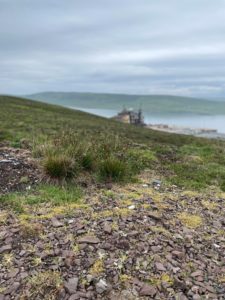
In the context of the logistical challenges of Shetlands, which sits 130 miles north of Scotland’s mainland, it is a remarkable micro economy with a population the size of Potters Bar. The economy is largely driven by construction and engineering companies who in recent years have often been working in close collaboration with some of the world’s largest businesses.
In the case of the Ninian Northern, an engineering firm over time will ‘termite’ the entire structure piece by piece – there are over 14,000 tonnes of topside structure to get through. But in a real testament to modern sustainable engineering practices, up to 97% of the platform will be recycled or reused across the surrounding islands.


Thomas Nicolson
Partner, Bonham & Brook
Related News Articles
-
 05/05/2025
-
 Tom Goodier
Being born in 1996 and part of the millennial generation I have been able to ...
Read More
-
10/02/2022
-
Thomas Nicolson
Shetland’s seafood industry is worth £320 million a year to the Shetland ...
Read More
-
26/01/2022
-
Thomas Nicolson
by Thomas Nicolson
Read More
-
07/01/2022
-
Thomas Nicolson
by Tom Nicolson
Read More