A Shock to the System: How High Electricity Costs Impacts UK Manufacturers and what you can do about it
June 17, 2025
The UK’s manufacturing sector is a cornerstone of the economy, contributing significantly to employment, innovation, and exports. However, UK manufacturers face high energy costs that have risen sharply over recent years, impacting operational expenses, competitiveness, investment and growth.
This article explores the effects of high energy costs on manufacturers, and their supply chain, the challenges they face, and pragmatic strategies that work, including how a Chemical Northwest Member are now saving seven-figures a year on their energy costs.
UK’s Energy Cost Disparity
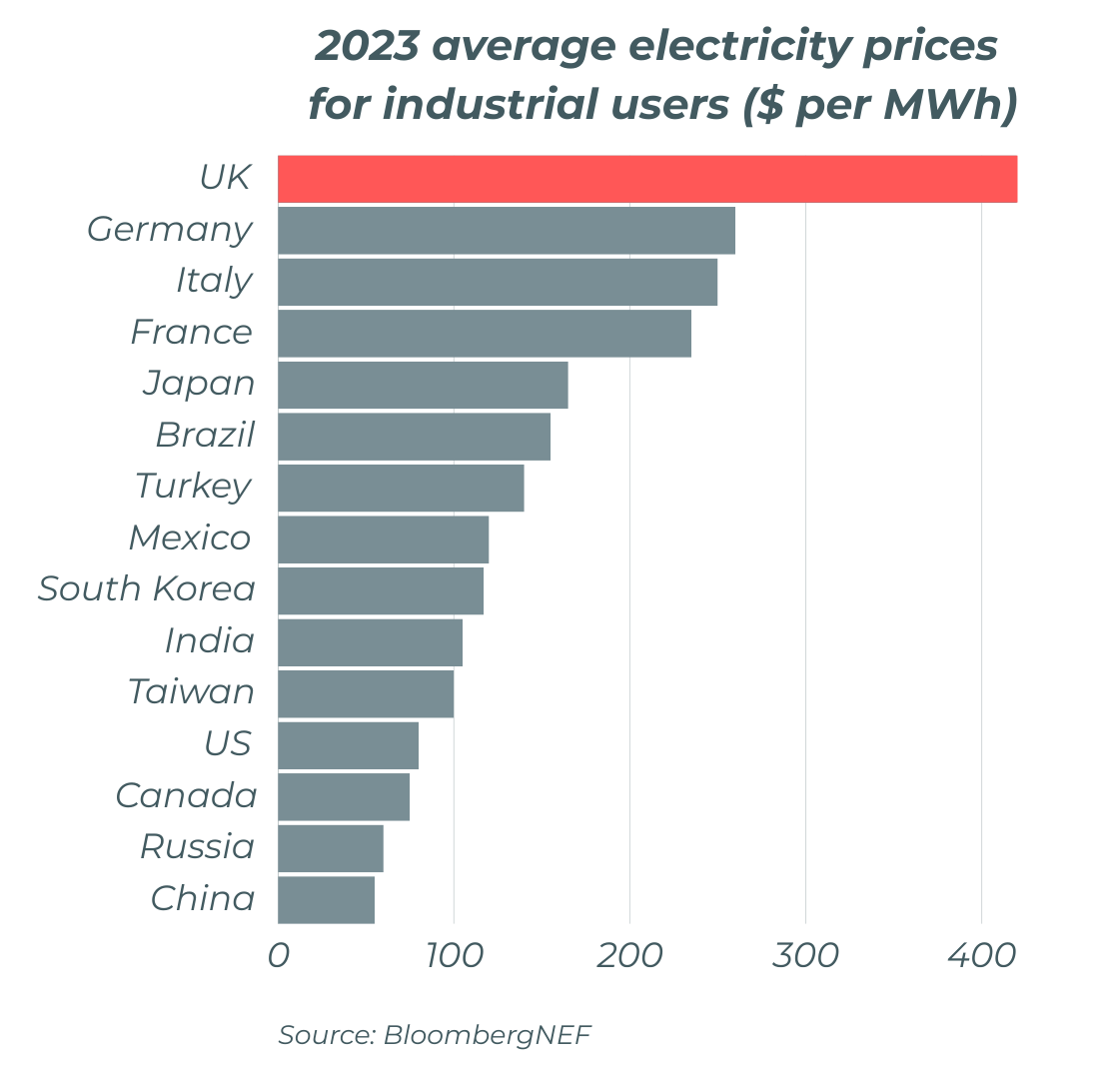
UK manufacturers bear some of the highest electricity costs in the OECD (Organisation for Economic Co-operation and Development); driven by regulatory frameworks, market dynamics, and the transition to renewable energy sources.
Impact on UK Manufacturers
Increased Operational Costs: High energy costs lead to increased operational expenses, particularly for energy-intensive industries like chemicals manufacturing, leading to plant closures such as INEOS’s synthetic ethanol facility at Grangemouth. These costs erode profit margins, reduce competitiveness, and limit investment in innovation and expansion.
Energy Price Volatility: The unpredictability of energy costs makes planning and budgeting challenging. Manufacturers must develop strategies to mitigate price fluctuations, such as investing in energy-efficient technologies and diversifying energy sources, to negotiating improved energy contracts and avoiding excessive uplift fees.
Transition to Renewable Energy: The shift to renewable energy is crucial for environmental sustainability but presents challenges to manufacturers due to the substantial initial investment required whilst maintaining consistent access to the (expensive) UK Grid.
Strategies and Solutions
While greener energy is essential for long-term sustainability, it has contributed to short-term cost burdens for manufacturers. Energy-intensive industries, especially chemicals, can overcome these challenges by adopting:
Energy Efficiency Measures: Investing in these measures can reduce energy consumption and lead to significant cost savings. Bonham & Brook has partnered with DCC plc, the FTSE100 energy transition and decarbonisation experts, to work with Manufacturers in upgrading machinery, improving insulation, and implementing energy management systems to enhance competitiveness.
Diversification of Energy Sources: Diversifying energy sources can help chemical manufacturers manage costs and reduce dependence on volatile energy markets. Options like combined heat and power (CHP) systems, biomass, and other alternative energy sources can provide stable and predictable energy pricing.
Government-Backed Energy Tax Incentives: Chemical Manufacturers are eligible for significant tax incentives known as the EII (Energy Intensive Industries) schemes; reducing energy costs ~25% for up to 5 years. EII savings can reinvested in sustainable and energy-efficient strategies, generating additional cost savings for years to come.
However, less than 6% of UK manufacturers with EII qualifying SIC codes have successfully applied for the EII tax exemptions, due to a lack of awareness or companies incorrectly assuming they’re not eligible when they are!
With offices in London, Glasgow and Manchester, Bonham & Brook’s dedicated EII Tax Consultants work with manufacturers throughout the UK and across multiple sectors, with notable success in chemical manufacturing.
Chemicals Northwest EII Success
Chemical Northwest member Lanxess (LXS) engaged Bonham & Brook to identify eligible energy tax incentives. Bonham & Brook successfully applied to the EII scheme on LXS’s behalf, saving precious time and delivering substantial savings.
As Paul Dunne, Lanxess GPL Strategic Buyer (Indirects) highlights:
“When LXS Chemical engaged with Bonham & Brook, [LXS] wasn’t fully aware of the potential impact the Energy Intensive Industries Exemption could have on its bottom line. However, taking the leap proved to be a game-changer.
The results spoke for themselves. The implementation of the EII scheme delivered substantial savings (seven-figures yearly), not just for LXS Chemical’s business unit but also within the broader KPI savings framework. The success of the initiative exceeded expectations and demonstrated the power of a well-executed strategy.
For businesses hesitant to take the first step, the Lanxess case study serves as proof that the right expertise through Bonham & Brook can unlock savings and efficiencies that were previously untapped. If you’re on the fence, let this be the reassurance you need to move forward with confidence.”
Find more information on Energy Intensive Industries (EII) tax incentives and compensation here
To discuss how Bonham & Brook can help your business contact Jon Menzies at jmenzies@bonhamandbrook.co.uk or Call/WhatsApp +44 (0) 7474 478228

Jon Menzies
Business Development Manager
Book a Meeting with Jon here
Related posts
Renewable Energy In The United Kingdom: The Past, The Present, Its The Future
A transition to clean energy is about making an investment in our future.